 Stammnitz Lab
Quantitative Cell Biology
- Group page
- Research lines
- Group members
- Publications

Biosketch
2027, Independent Fellow, CRG (Spain) and AR+I (Andorra)
2026, Staff Scientist, Ferruz Lab, CRG (Spain)
2022-2026, EMBO and Marie Skłodowska-Curie Postdoc Fellow, CRG (Spain)
2015-2022, PhD and Bridge Postdoc in Genomics, University of Cambridge (UK).
2014-2015, MPhil in Computational Biology, University of Cambridge (UK)
2011-2014, BSc in Biology, University of Freiburg (Germany)
Summary
How do proteins evolve to sense environmental chemistry with extreme specificity and sensitivity? Can we decode the molecular determinants by which these structures are tuned and engineered? In our group, we perform large-scale protein library screens to determine proteins’ small molecule interaction profiles (e.g. see Stammnitz & Lehner, Nature Communications 2026). We test thousands of hormone receptors from plants to humans, as well as anti-fungal and ‘molecular glue’ compounds which chemically modulate their protein targets. With the help of these functional genomics experiments, AI-enhanced evolutionary inference and protein structure modelling, our goal is to design a range of new biosensors for the scalable monitoring of invisible chemicals – this holds key applications for One Health.
We are a small and multidisciplinary team. Together with Hannah Benisty’s group and our partners at AR+I, we are the founding team of the new joint green biotechnology and environmental monitoring initiative between CRG and the Principality of Andorra.
News
Hannah Benisty and Maximilian Stammnitz join AR+I–CRG Mountain Genomics Talent Programme (15/09/2026)
The fellows will help build research capacity in Andorra through a three-year fellowship
Software
nf-core/deepmutscan: a reproducible, scalable, and community-curated pipeline for analyzing deep mutational scanning (DMS) data using shotgun DNA sequencing
Job Openings
We are recruiting PhD candidates via CRG’s international call. Please get in touch by email if you would like to hear more about our research opportunities, or if you are considering joining in another role (e.g. for a Master’s thesis). We encourage self-motivated candidates and are always happy to discuss your own project ideas in the context of chemical biology, protein engineering, experimental and computational genomics.
Collectively, our group’s efforts share the long-term vision to make a largely invisible world visible: the chemistry around and within us, read out by exquisite proteins that have evolved to sense it. Our projects run as hybrid wet-dry laboratory work; we always welcome students and postdocs who are strong on either the experimental or computational side, and keen to learn the other.
1. How do proteins recognise small molecules, exactly?
Cells read their chemical surroundings through a great variety of protein folds which change in shape and activity when a small molecule ligand binds; among these are chemically inducible membrane receptors, transcription factors and key parts of the cell’s degradation machinery. Across multicellular life, the evolution of hormone receptors has seen a repurposing of the same folds many times over, fine-tuning their specificity and sensitivity to monitor the levels of important small molecule families in development, health and disease. Many parasite species have become masters in the art of hijacking their hosts’ chemical receptors, and cellular drug resistance to chemotherapy or antibiotic treatment often evolves around the disruption of key protein-small molecule contacts. Yet, we can still only characterise such interactions one at a time. This leaves the quantitative rules (e.g. trade-offs between specificity and sensitivity) largely unmeasured and hinders mechanistic insights that could be very valuable in drug research and bioengineering. Our group’s mission is to change this. We want to learn the exact rules of small molecule sensing and make predictive models to design new biosensors for tackling real-world problems. To this end, we develop high-throughput DNA barcoding and sequencing methods that allow us to test how tens of thousands of protein variants respond to chemical ligands.
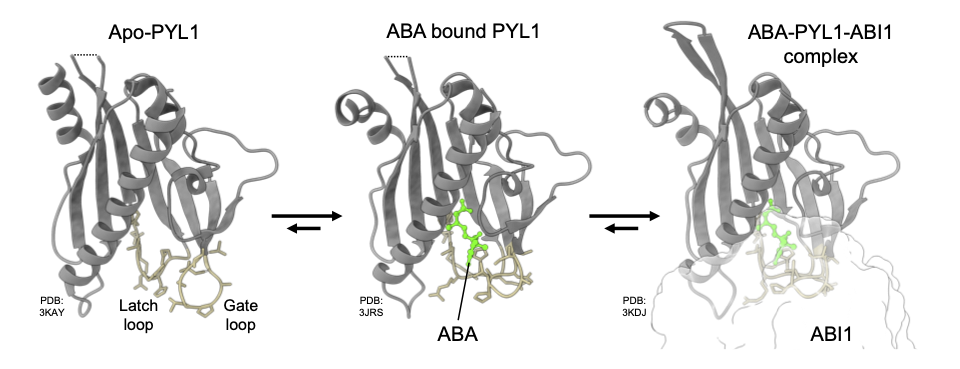
Shown here for the abscisic acid (‘ABA’) hormone receptor PYL1 (Stammnitz & Lehner, Nature Communications 2026).
2. Environmental metagenomes: a deep source of chemical sensor proteins?
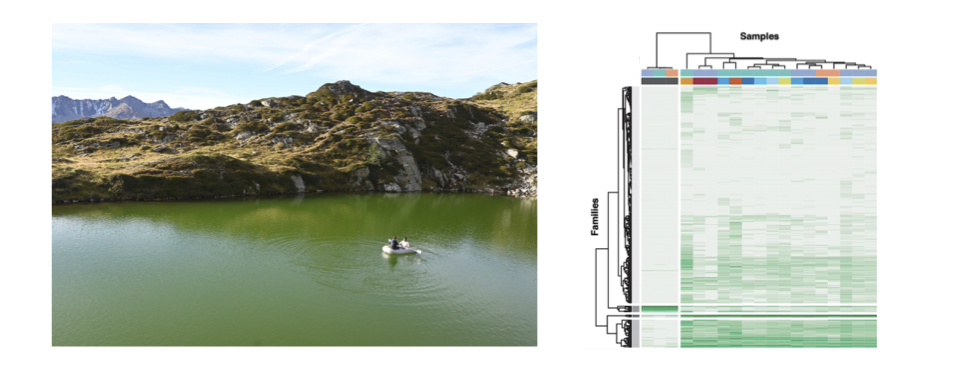
Most of the protein diversity on Earth sits in environmental samples, in organisms’ traces from soil, water, landfills and other substrates that have never been characterised beyond (at least) their raw DNA sequences. This untapped functional biodiversity holds huge opportunity for the discovery of small molecule-binding proteins. The folds that our lab cares most about, hormone receptors, often date back hundreds of millions of years and many of their modern relatives have diverged far past the point where amino acid sequence similarity searches could allow us to find them. But their rough 3D shapes are conserved, and new AI-based protein structure prediction and search methods at database scale have recently made those ‘remote relatives’ findable for the first time. Our group mines environmental DNA databases and the protein structure space for chemically responsive folds, then synthesises and profiles the most promising ‘natural’ biosensors in the laboratory. And some of these will stem from an incredible open-air laboratory right around the corner: the Pyrenees. Together with Hannah Benisty’s group, the PyriSentinel initiative and our colleagues at AR+I, we are sifting the protein traces of >300 high-mountain lake metagenomes from across Spain, France and Andorra.