
 Plant hormone allows lifelong control of proteins in living animal
Plant hormone allows lifelong control of proteins in living animal
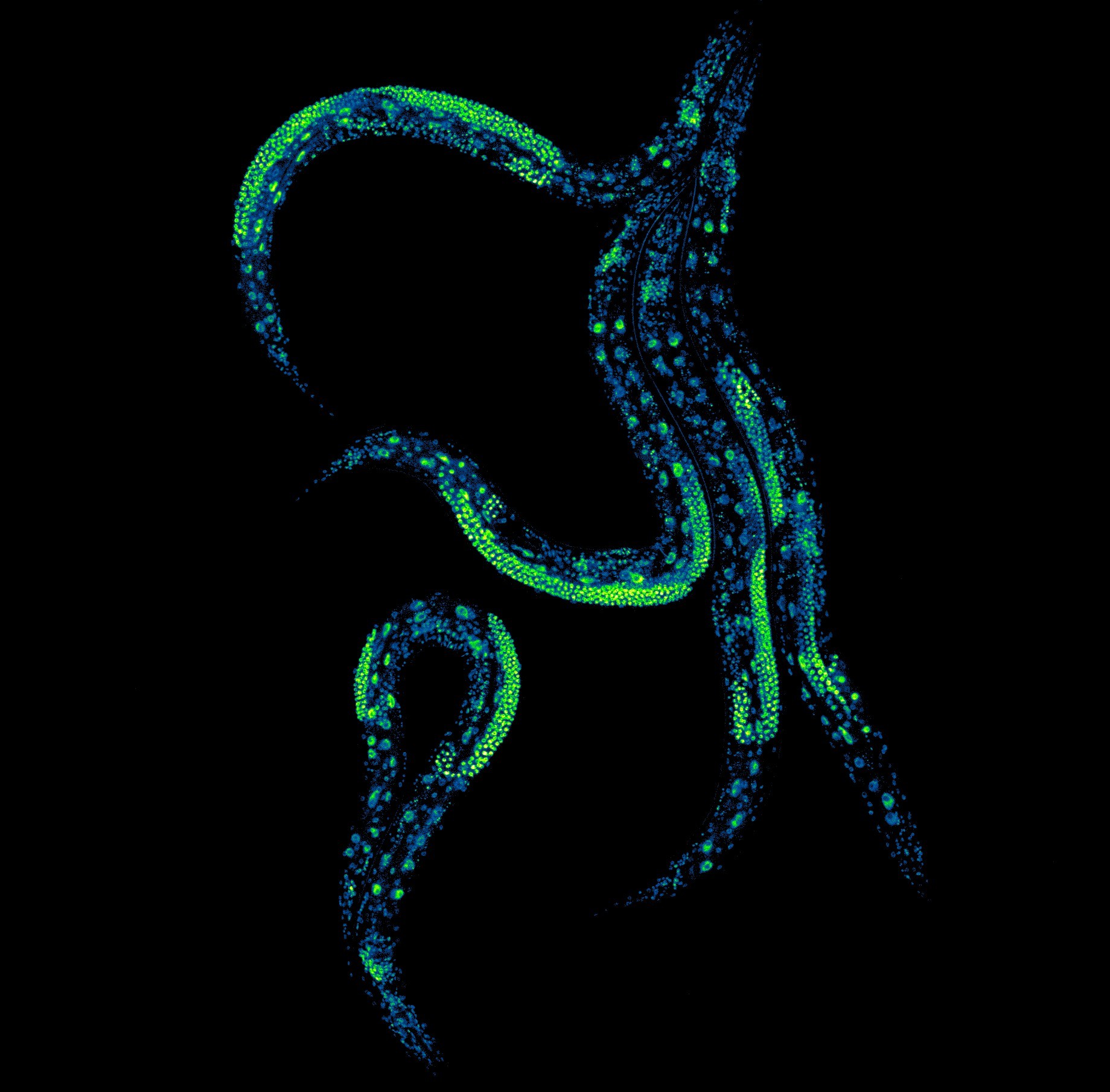
Researchers have found a way to control protein levels inside different tissues of a whole, living animal for the first time. The method lets scientists dial protein levels up or down with great precision during the animal’s entire life, a technological advance which can help them study the molecular underpinnings of ageing and disease.
Scientists at the Centre for Genomic Regulation in Barcelona and the University of Cambridge successfully tested the technique by controlling how much protein was present in the intestines and neurons of the nematode worm Caenorhabditis elegans. Their findings are described today in the journal Nature Communications.
The study paves the way for designing completely new experiments that were impossible to carry out with current techniques, like understanding how much of a protein is needed to maintain good health, or tracing how small perturbations to a protein in one tissue can ripple across the whole body.
“No protein acts alone. Our new approach lets us study how multiple proteins in different tissues cooperate to control how the body functions and ages,” says Dr. Nicholas Stroustrup, researcher at the Centre for Genomic Regulation and senior author of the paper.
The new method will have particularly important implications for studying whole-body, systemic processes like ageing, which are shaped by constant interactions between different organs. If a protein affects lifespan in different ways across different body parts, traditional methods can’t always separate those effects using typical on/off experiments with genes.
This lack of precise, lifelong, tissue-by-tissue control has made it difficult to understand how different parts of our body drive ageing, how they talk to each other and how subtle molecular changes ripple through the entire organism over time. According to the authors of the study, what’s also been missing until now is finesse and calibration.
“To unpick nuance in biology, sometimes you need half the concentration of a protein here and a quarter there, but all we’ve had up till now are techniques focused on wiping a protein out. We wanted to be able to control proteins like you turn the volume up or down on a TV, and now we can now ask all sorts of new questions,” explains Dr. Stroustrup.
The technique is an adaptation of existing technology which originates from plant biology. Plants use a hormone called auxin to control growth. Researchers working with yeast created a popular lab tool known as the auxin-inducible degron system, also known as the AID system.
It works by tagging a protein with a tag, also known as a degron. An enzyme called TIR1 recognises the degron and destroys the protein, but only when auxin is present. Remove the plant hormone and the protein comes back. Since its discovery, the AID system has become a widely used tool in cells and model organisms for rapid, reversible protein control.
Now, by engineering different versions of the TIR1 enzyme and degrons and testing them across more than one hundred thousand nematodes, the researchers have created a newer, more flexible version which they call a “dual-channel” AID system.
Rather than switching proteins on or off, the technique allows scientists to control how much of a protein remains, where in the body it is controlled and when the change happens. All this while the animal continues to live normally: eating, moving and growing as the system quietly adjusts protein levels inside the tissues of its body.
The new technique works by attaching to the end of the target protein a degron tag and then genetically engineering worms to produce a TIR1 enzyme in specific tissues only. When the worms are fed auxin-containing food, the plant hormone activates TIR1, which recognises the degron tag and tells the cell to remove just the right amount of that protein.
The important innovation was combining two different TIR1 enzymes, each triggered by a different auxin compound. By placing them in different tissues, they could independently control the same protein in the worm’s intestine and in its neurons or even control two different proteins at the same time.
The researchers also overcame another hurdle, which is that AID systems often fail to work in reproductive tissues. The team traced this to a biological process in the germline and adapted their new system to get around it, creating a tool that works across the whole body, including reproductive cells.
"Getting this to work was quite an engineering challenge. We had to test different combinations of synthetic switches to find the perfect pair that didn't interfere with one another. Now that we've cracked it, we can control two separate proteins simultaneously with incredible precision. It's a powerful tool that we hope will open up new possibilities for biologists everywhere,” concludes Dr. Jeremy Vicencio, postdoctoral researcher at the Centre for Genomic Regulation and coauthor of the study.
EN CASTELLANO
Una hormona vegetal permite controlar las proteínas durante toda la vida de un animal vivo
Se ha podido por primera vez controlar los niveles de proteínas en distintos tejidos de un animal vivo completo.
Un nuevo método permite aumentar o disminuir con gran precisión los niveles proteicos a lo largo de toda la vida del animal. Se trata de un avance tecnológico que puede contribuir a estudiar las bases moleculares del envejecimiento y de la enfermedad.
Equipos científicos del Centro de Regulación Genómica en Barcelona y de la Universidad de Cambridge probaron con éxito la técnica en gusanos, controlando la cantidad de proteína presente en los intestinos y en las neuronas del nematodo Caenorhabditis elegans. Sus resultados se describen hoy en la revista Nature Communications.
El estudio allana el camino para diseñar experimentos completamente nuevos, imposibles de llevar a cabo con las técnicas actuales, como entender cuánta proteína se necesita para mantener una buena salud o rastrear cómo pequeñas perturbaciones en una proteína de un tejido pueden propagarse por todo el organismo.
“Ninguna proteína actúa sola. Nuestro nuevo enfoque nos permite estudiar cómo múltiples proteínas en distintos tejidos cooperan para controlar cómo funciona y envejece el organismo”, afirma el Dr. Nicholas Stroustrup, investigador del Centro de Regulación Genómica y autor principal del artículo.
El nuevo método tendrá implicaciones especialmente importantes para estudiar procesos sistémicos de todo el organismo, como el envejecimiento, que se configuran mediante interacciones constantes entre diferentes órganos. Si una proteína afecta a la longevidad de maneras diferentes según la parte del cuerpo, los métodos tradicionales no siempre permiten separar esos efectos mediante los experimentos típicos de activación o eliminación génica.
Esta falta de un control preciso, durante toda la vida y tejido por tejido, ha dificultado entender cómo distintas partes del organismo impulsan el envejecimiento, cómo se comunican entre sí y cómo pequeños cambios moleculares se propagan por todo el organismo con el tiempo. Según los autores del estudio, lo que también ha faltado hasta ahora ha sido sutileza y calibración.
“Para desentrañar los matices de la biología, a veces se necesita la mitad de la concentración de una proteína aquí y una cuarta parte allá, pero lo único que teníamos hasta ahora eran técnicas centradas en eliminar una proteína. Queríamos ser capaces de controlar las proteínas como quien sube o baja el volumen de un televisor, y ahora podemos plantear todo tipo de preguntas nuevas”, explica el Dr. Stroustrup.
La técnica es una adaptación de una tecnología existente que tiene su origen en la biología vegetal. Las plantas utilizan una hormona llamada auxina para controlar su crecimiento. Un equipo que trabajaba con levaduras creó una herramienta de laboratorio muy popular conocida como el sistema de degrón inducible por auxina, también denominado sistema AID (por sus siglas en inglés).
Funciona marcando una proteína con un degrón, una molécula que sirve de etiqueta. La enzima TIR1 reconoce el degrón y destruye la proteína, pero solo cuando la auxina está presente. Si se retira la hormona vegetal, la proteína reaparece. Desde su descubrimiento, el sistema AID se ha convertido en una herramienta muy utilizada en células y organismos modelo para el control rápido y reversible de proteínas.
Ahora, mediante la ingeniería de distintas versiones de la enzima TIR1 y de los degrones, y tras probarlas en más de cien mil nematodos, el equipo del CRG ha creado una versión más moderna y flexible, que denominan sistema AID de “doble canal”.
En lugar de activar o desactivar proteínas, la técnica permite controlar cuánta proteína permanece, en qué parte del cuerpo se regula y cuándo se produce el cambio. Todo ello mientras el animal sigue viviendo con normalidad: comiendo, moviéndose y creciendo, mientras el sistema ajusta silenciosamente los niveles proteicos en los tejidos de su cuerpo.
La nueva técnica funciona adhiriendo un degrón al extremo de la proteína diana. Los gusanos se han modificado genéticamente para que produzcan la enzima TIR1 solo en tejidos específicos. Cuando los gusanos se alimentan con comida que contiene auxina, la hormona vegetal activa TIR1, que reconoce la etiqueta del degrón e indica a la célula que elimine únicamente la cantidad adecuada de esa proteína.
La innovación clave fue combinar dos enzimas TIR1 distintas, cada una activada por un compuesto de auxina diferente. Al situarlas en tejidos distintos, pudieron controlar de forma independiente la misma proteína en el intestino y en las neuronas del gusano, o incluso controlar dos proteínas diferentes al mismo tiempo.
Los investigadores también superaron otro obstáculo: los sistemas AID suelen fallar en los tejidos reproductivos. El equipo rastreó este problema hasta un proceso biológico en la línea germinal y adaptó su nuevo sistema para sortearlo, creando una herramienta que funciona en todo el organismo, incluyendo las células reproductoras.
“Conseguir que esto funcionara fue un auténtico reto de ingeniería. Tuvimos que probar distintas combinaciones de interruptores sintéticos para encontrar la pareja perfecta que no interfiriera entre sí. Ahora que lo hemos conseguido, podemos controlar dos proteínas diferentes de forma simultánea y con una precisión increíble. Es una herramienta muy potente y esperamos que abra nuevas posibilidades para biólogos de todo el mundo”, concluye el Dr. Jeremy Vicencio, investigador posdoctoral del Centro de Regulación Genómica y coautor del estudio.
EN CATALÀ
Una hormona vegetal permet controlar les proteïnes durant tota la vida d'un animal viu
S'ha pogut per primera vegada controlar els nivells de proteïnes en diferents teixits d'un animal viu complet.
Un nou mètode permet augmentar o disminuir amb gran precisió els nivells proteics al llarg de tota la vida de l'animal. Es tracta d'un avenç tecnològic que pot contribuir a estudiar les bases moleculars de l'envelliment i de la malaltia.
Equips científics del Centre de Regulació Genòmica a Barcelona i de la Universitat de Cambridge van provar amb èxit la tècnica en cucs, controlant la quantitat de proteïna present als intestins i a les neurones del nematode Caenorhabditis elegans. Els seus resultats es descriuen avui a la revista Nature Communications.
L'estudi aplana el camí per dissenyar experiments completament nous, impossibles de dur a terme amb les tècniques actuals, com entendre la quantitat necessària de proteïna per mantenir una bona salut o rastrejar com petites pertorbacions en una proteïna d'un teixit poden propagar-se per tot l'organisme.
"Cap proteïna actua sola. Aquest nou enfocament ens permet estudiar com múltiples proteïnes en diferents teixits cooperen per controlar com funciona i envelleix l'organisme", afirma el Dr. Nicholas Stroustrup, investigador del Centre de Regulació Genòmica i autor principal de l'article.
El nou mètode tindrà implicacions especialment importants per estudiar processos sistèmics de tot l'organisme, com l'envelliment, que es configuren mitjançant interaccions constants entre diferents òrgans. Si una proteïna afecta la longevitat de maneres diferents segons la part del cos, els mètodes tradicionals no sempre permeten separar aquests efectes mitjançant els experiments típics d'activació o eliminació gènica.
Aquesta falta d'un control precís, durant tota la vida i teixit per teixit, ha dificultat entendre com diferents parts de l'organisme impulsen l'envelliment, com es comuniquen entre si i com petits canvis moleculars es propaguen per tot l'organisme amb el temps. Segons els autors de l'estudi, el que també ha faltat fins ara ha estat subtilesa i calibratge.
"Per desentranyar els matisos de la biologia, de vegades es necessita la meitat de la concentració d'una proteïna aquí i una quarta part allà, però l'únic que teníem fins ara eren tècniques centrades a eliminar una proteïna. Volíem ser capaços de controlar les proteïnes com qui puja o baixa el volum d'un televisor, i ara podem plantejar tota mena de preguntes noves", explica el Dr. Stroustrup.
La tècnica és una adaptació d'una tecnologia existent que té el seu origen en la biologia vegetal. Les plantes utilitzen una hormona anomenada auxina per controlar el seu creixement. Un equip que treballava amb llevats va crear una eina de laboratori molt popular coneguda com el sistema de degron induïble per auxina, també anomenat sistema AID (per les seves sigles en anglès).
Funciona marcant una proteïna amb un degron, una molècula que serveix d'etiqueta. L'enzim TIR1 reconeix el degron i destrueix la proteïna, però només quan l'auxina hi és present. Si es retira l'hormona vegetal, la proteïna reapareix. Des del seu descobriment, el sistema AID s'ha convertit en una eina molt utilitzada en cèl·lules i organismes model per al control ràpid i reversible de proteïnes.
Ara, mitjançant l'enginyeria de diferents versions de l'enzim TIR1 i dels degrons, i després de provar-les en més de cent mil nematodes, l'equip del CRG ha creat una versió més moderna i flexible, que denominen sistema AID de "doble canal".
En lloc d'activar o desactivar proteïnes, la tècnica permet controlar la quantitat de proteïna que es queda, en quina part del cos es regula i quan es produeix el canvi. Tot això mentre l'animal continua vivint amb normalitat: menjant, movent-se i creixent, mentre el sistema ajusta silenciosament els nivells proteics en els teixits del seu cos.
La nova tècnica funciona adherint un degron a l'extrem de la proteïna diana. Els cucs s'han modificat genèticament perquè produeixin l'enzim TIR1 només en teixits específics. Quan els cucs s'alimenten amb menjar que conté auxina, l'hormona vegetal activa TIR1, que reconeix l'etiqueta del degron i indica a la cèl·lula que elimini únicament la quantitat adequada d'aquesta proteïna.
La innovació clau va ser combinar dos enzims TIR1 diferents, cadascun activat per un compost d'auxina diferent. En situar-los en teixits diferents, van poder controlar de forma independent la mateixa proteïna a l'intestí i a les neurones del cuc, o fins i tot controlar dues proteïnes diferents alhora.
Els investigadors també van superar un altre obstacle: els sistemes AID solen fallar en els teixits reproductius. L'equip va rastrejar aquest problema fins a un procés biològic en la línia germinal i va adaptar el seu nou sistema per sortejar-lo, creant una eina que funciona en tot l'organisme, incloent-hi les cèl·lules reproductores.
"Aconseguir que això funcionés va ser un autèntic repte d'enginyeria. Vam haver de provar diferents combinacions d'interruptors sintètics per trobar la parella perfecta que no interferís entre si. Ara que ho hem aconseguit, podem controlar dues proteïnes diferents de forma simultània i amb una precisió increïble. És una eina molt potent i esperem que obri noves possibilitats per a biòlegs de tot el món", conclou el Dr. Jeremy Vicencio, investigador postdoctoral del Centre de Regulació Genòmica i coautor de l'estudi.