
 Stammnitz Lab
Quantitative Cell Biology
- Group page
- Research lines
- Group members
- Publications
Quantitative Cell Biology

Biosketch
2027, Independent Fellow, CRG (Spain) and AR+I (Andorra)
2026, Staff Scientist, Ferruz Lab, CRG (Spain)
2022-2026, EMBO and Marie Skłodowska-Curie Postdoc Fellow, CRG (Spain)
2015-2022, PhD and Bridge Postdoc in Genomics, University of Cambridge (UK).
2014-2015, MPhil in Computational Biology, University of Cambridge (UK)
2011-2014, BSc in Biology, University of Freiburg (Germany)
Summary
How do proteins evolve to sense environmental chemistry with extreme specificity and sensitivity? Can we decode the molecular determinants by which these structures are tuned and engineered? In our group, we perform large-scale protein library screens to determine proteins’ small molecule interaction profiles (e.g. see Stammnitz & Lehner, Nature Communications 2026). We test thousands of hormone receptors from plants to humans, as well as anti-fungal and ‘molecular glue’ compounds which chemically modulate their protein targets. With the help of these functional genomics experiments, AI-enhanced evolutionary inference and protein structure modelling, our goal is to design a range of new biosensors for the scalable monitoring of invisible chemicals – this holds key applications for One Health.
We are a small and multidisciplinary team. Together with Hannah Benisty’s group and our partners at AR+I, we are the founding team of the new joint green biotechnology and environmental monitoring initiative between CRG and the Principality of Andorra.
Software
nf-core/deepmutscan: a reproducible, scalable, and community-curated pipeline for analyzing deep mutational scanning (DMS) data using shotgun DNA sequencing
Job Openings
We are recruiting PhD candidates via CRG’s international call. Please get in touch by email if you would like to hear more about our research opportunities, or if you are considering joining in another role (e.g. for a Master’s thesis). We encourage self-motivated candidates and are always happy to discuss your own project ideas in the context of chemical biology, protein engineering, experimental and computational genomics.
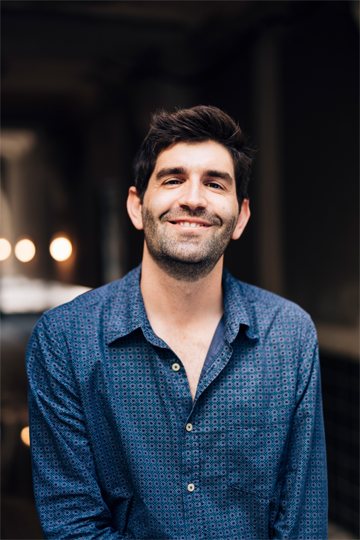
Group Leader